


A historic breakthrough for Indian women’s wrestling
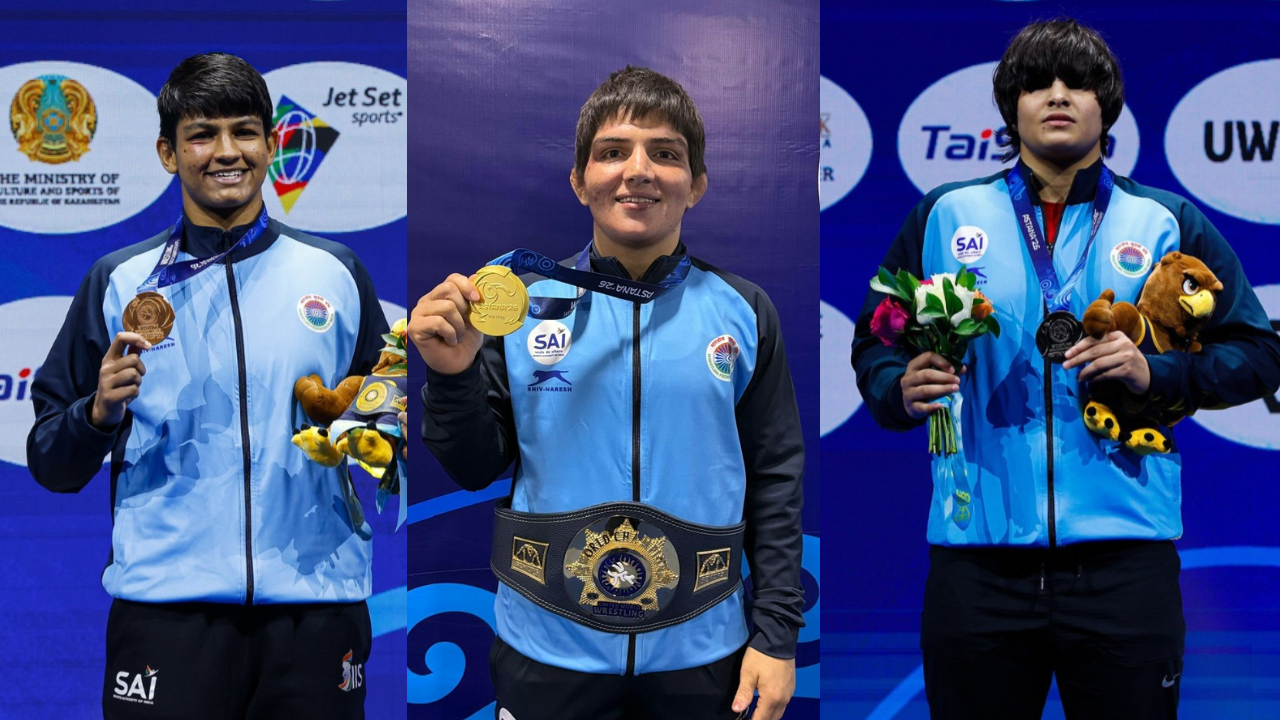
Indian women’s wrestling achieved a historic milestone at the 2026 Senior World Wrestling Championships. Manisha Bhanwala became the first Indian woman to win a senior World Championships gold medal. She defeated USA’s Abigail Nette 8-6 in the 59kg final after trailing 0-6.
India finished the competition with four medals: one gold, two silver and one bronze. Kajal Dhochak (76kg) and Neelam Sirohi (50kg) won silver, while Tanu Sharma (72kg) claimed bronze. Three Indian wrestlers reached the finals, and the team finished fifth in the women’s freestyle team standings with 94 points.
This was India’s best-ever performance at the Women’s World Championships. But the significance of this result goes beyond the medal count. For the first time, an Indian woman had become a senior world champion. It was a barrier that Indian women’s wrestling had been trying to break for decades.
A history of individual brilliance, not sustained dominance
To understand the importance of this achievement, it is worth looking at India’s history at the Senior World Championships.
Alka Tomar won India’s first women’s World Championships medal in 2006. After that, Geeta Phogat and Babita Phogat won bronze medals in 2012. Pooja Dhanda added another bronze in 2018.
India then began to show more regular results. Since Pooja’s medal in 2018, the country has won at least one medal at every edition through 2025. In total, Indian women had won 11 senior World Championships medals before the 2026 edition: one silver and 10 bronze.
Anshu Malik, who won silver in 2021, was the only Indian woman to reach a World Championships final before 2026. Vinesh Phogat and Antim Panghal were the only two Indian women to win two medals each, both securing two bronze medals.
These achievements deserve recognition. However, India’s success was largely built around occasional individual performances rather than a consistently strong group across different weight categories. The country had talented wrestlers who could challenge the best. But it struggled to develop the depth needed to become a regular contender for the team title.
The 2026 performance could mark a change in that pattern.
The Olympic picture tells a similar story
India’s record at the Olympics also highlights the difference between individual success and overall depth.
Indian wrestlers have won seven Olympic medals since Beijing 2008. Only one of them has come from women’s wrestling: Sakshi Malik’s bronze at Rio 2016. She remains the only Indian woman to win an Olympic wrestling medal to date.
However, Sakshi was unable to maintain that level of consistency in the years that followed. Her Olympic medal remained the biggest achievement of her career at the global level. She also often struggled to retain her place in the national team.
Vinesh Phogat’s near misses
Arguably, the most consistent Indian woman wrestler on the international stage has been Vinesh Phogat. She has won two World Championships medals. She also remains the only Indian woman wrestler to win an Asian Games gold medal.
However, she could not replicate her international success at the Olympic Games. At Tokyo 2020, despite being one of India’s strongest medal hopes, she suffered a disappointing quarterfinal exit. At Paris 2024, she produced a remarkable campaign, defeating reigning Olympic champion Yui Susaki and reaching the final. But she was disqualified before the final for being over the weight limit. That was an extremely unfortunate end to what could have been a historic campaign.
Vinesh’s career was therefore affected by both bad luck and occasions when she could not deliver her best performance on the day. She achieved some remarkable things in her career, but given her potential and consistency at the international level, she could arguably have achieved even bigger things.
For years, India had individual wrestlers capable of producing major results, but it did not have enough depth to consistently challenge the leading nations.
A stronger group is emerging
The most encouraging part of the 2026 World Championships was not just Manisha’s gold medal. It was the emergence of a stronger group of wrestlers across different weight categories.
Manisha is 29, so her achievement is not about the arrival of a young prospect. Its importance is that she has broken a psychological barrier. Indian women wrestlers now have a senior world champion to look up to, and the belief that winning the biggest title is possible should not be underestimated.
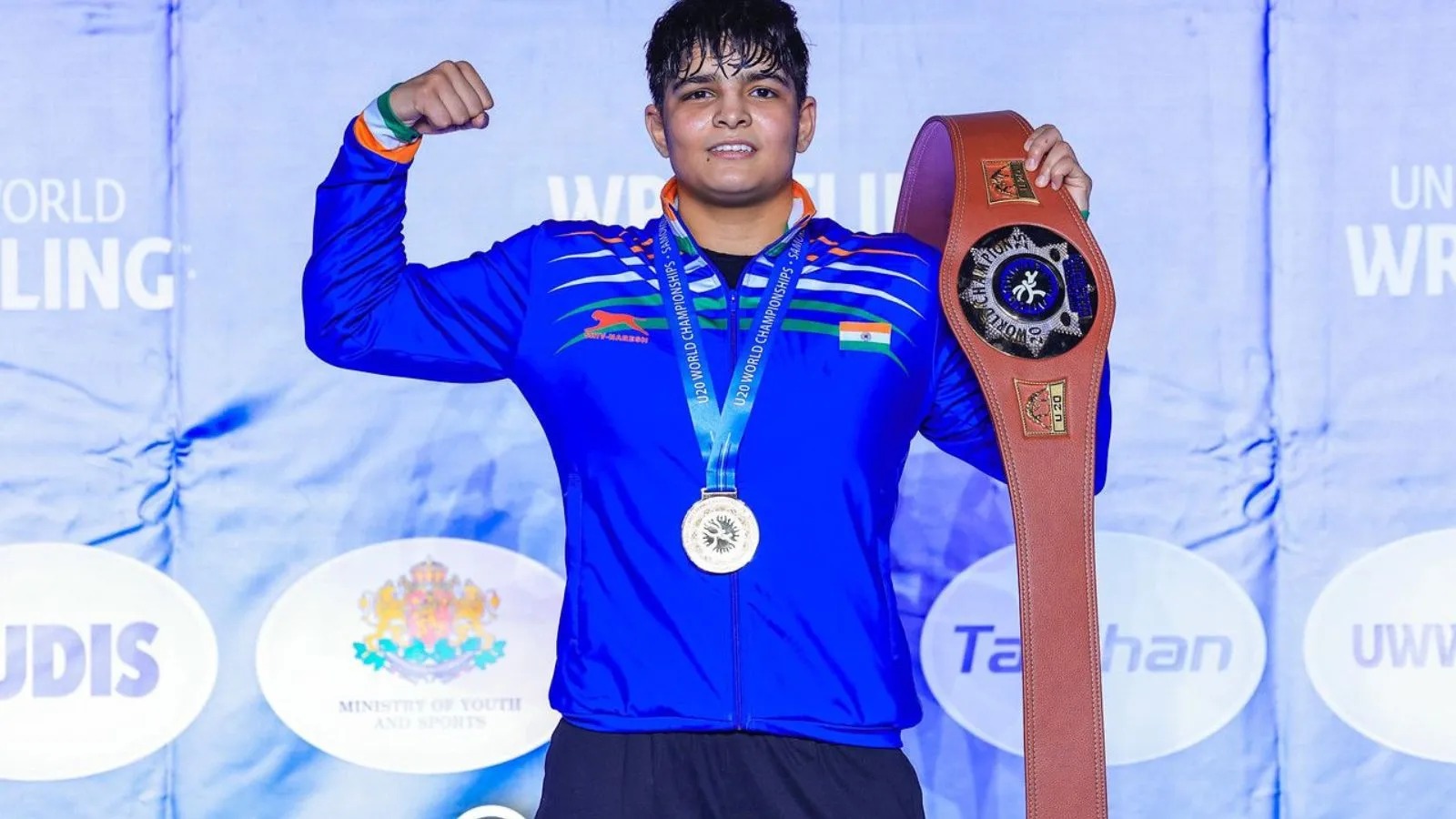
At the same time, there is an exciting group of younger wrestlers coming through. Antim Panghal and Kajal Dhochak are two standout names, with both having won two U20 World Championships titles. There are also promising wrestlers across several other weight categories who have already shown their ability at the junior level.
Depth across weight categories
The competition for places in the national team is becoming stronger as well. Domestic trials are increasingly competitive, and a place in the team can no longer be taken for granted.
Historically, India’s progress has been more visible in the lighter weight categories. However, in recent times, we have also seen the emergence of some very promising talents in the heavier weight divisions. Kajal Dhochak, who won silver in the 76kg category at the 2026 Senior World Championships, is among the brightest of these prospects.
This growing depth is perhaps the most important development for the future. A strong wrestling nation cannot depend on one or two exceptional athletes. It needs competitive wrestlers in every weight category.
The junior revolution behind Indian women’s wrestling
One of the biggest reasons for optimism is the transformation of Indian women’s wrestling at the junior level.
India had started getting encouraging results at the U17 World Championships from the mid-2010s, regularly finishing among the top five teams from 2016 onwards. However, progress at the U20 level was much slower. Until the late 2010s, India was still struggling to produce consistent results and had barely established itself as a medal contender.
The achievements of the previous generation also highlight this gap. Geeta and Babita Phogat did not win U20 World Championships medals, while Sakshi Malik managed a bronze medal in 2010. India’s overall record at this level remained modest for a long time.
There is also an important difference between the U17 and U20 age groups. At U17 level, physical development can vary considerably between wrestlers. An older or more physically developed athlete can have a significant advantage against someone who is still 15 or 16, which can sometimes distort the picture of long-term potential.
At U20 level, most wrestlers are more physically mature, and the competition generally offers a more reliable indication of who could develop into a successful senior wrestler. That makes India’s recent progress at this level particularly encouraging.
Rising to the top at U20 level
In 2021, Indian women won five medals at the U20 World Championships, including three silver and two bronze. However, Japan and China were absent from that edition, which provides important context to the performance.
The following year, India made another significant breakthrough when Antim Panghal became the country’s first-ever women’s U20 world champion. Japan returned to the competition in 2022, although China was still absent. Antim’s gold was particularly significant because she defeated a Japanese wrestler on her way to the title.
The real evidence of India’s growing strength against the leading nations became even clearer from 2023 onwards. With both Japan and China back in the competition, Indian women won their first-ever U20 World Championships team title in 2023, finishing ahead of powerhouse Japan.
Since 2022, India has won at least five medals at every edition and has consistently finished among the top two teams. The progress continued in 2026, when Indian women won six medals, including one gold, three silver and two bronze, and finished second in the team standings with 133 points, just behind Japan’s 167.
Kajal Dhochak’s second U20 world title was another highlight.
Junior success does not automatically guarantee senior success. The transition to senior wrestling is difficult, and many talented juniors struggle to reproduce their performances against experienced international opponents. However, the consistent results at the U20 level suggest that India is now developing a much stronger pipeline of wrestlers.
The challenge is to ensure that this progress continues when these athletes move into senior competition.
What next for Indian women’s wrestling?
The immediate priority should be to maintain this level of performance at the 2027 Senior World Championships. The competition will be particularly important because it will also serve as the first direct Olympic qualification event for Los Angeles 2028.
India should aim to secure Olympic quotas in all six women’s weight categories and then target multiple medals at the Games. The objective should not simply be to qualify a few wrestlers, but to build a team capable of competing for medals across different categories.
Beyond the Olympics, the bigger target should be to regularly produce world champions and move closer to the top three in the women’s team standings at the World Championships.
India still has a long way to go before it can consistently challenge Japan and other leading wrestling nations. But finishing fifth with 94 points at the 2026 World Championships, along with the emergence of a stronger group and consistent junior-level success, shows that progress is being made.
The challenge now is to turn this breakthrough into sustained success. It may be too early to call this a golden era, but Indian women’s wrestling has given itself a strong foundation to build something special.
Author – Aayush Kumar
One thought on “Indian Women’s Wrestling: The Beginning of Something Special”