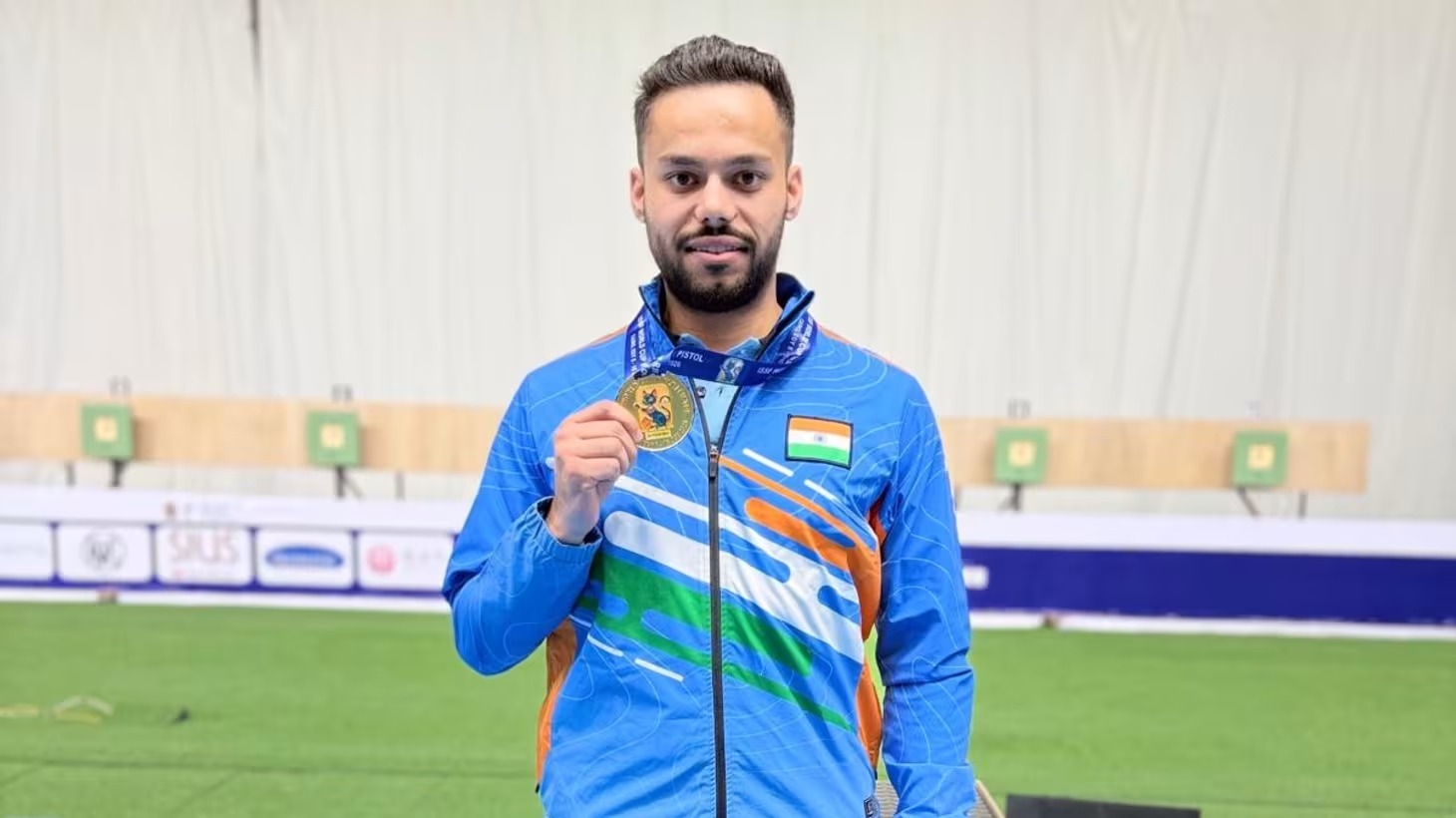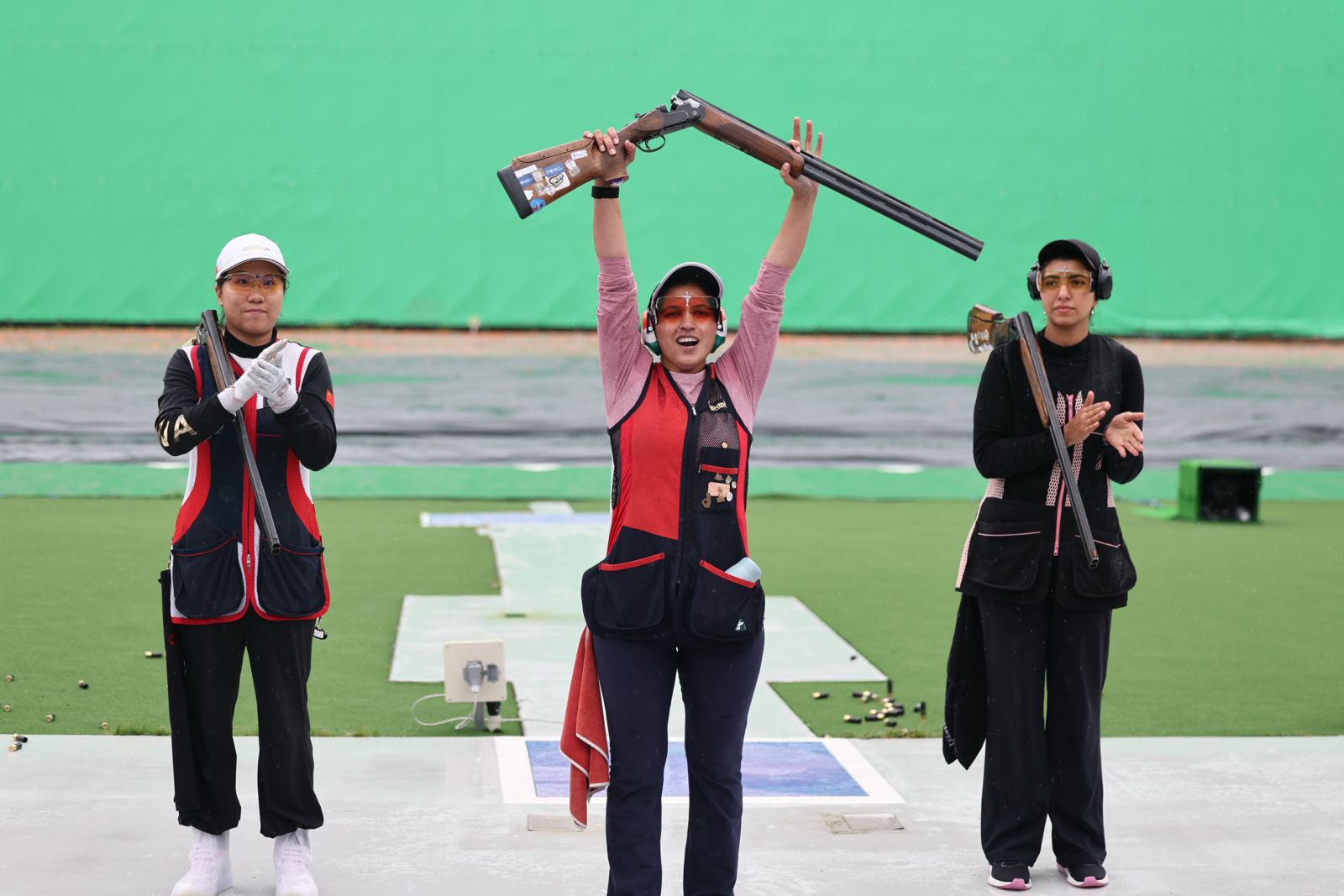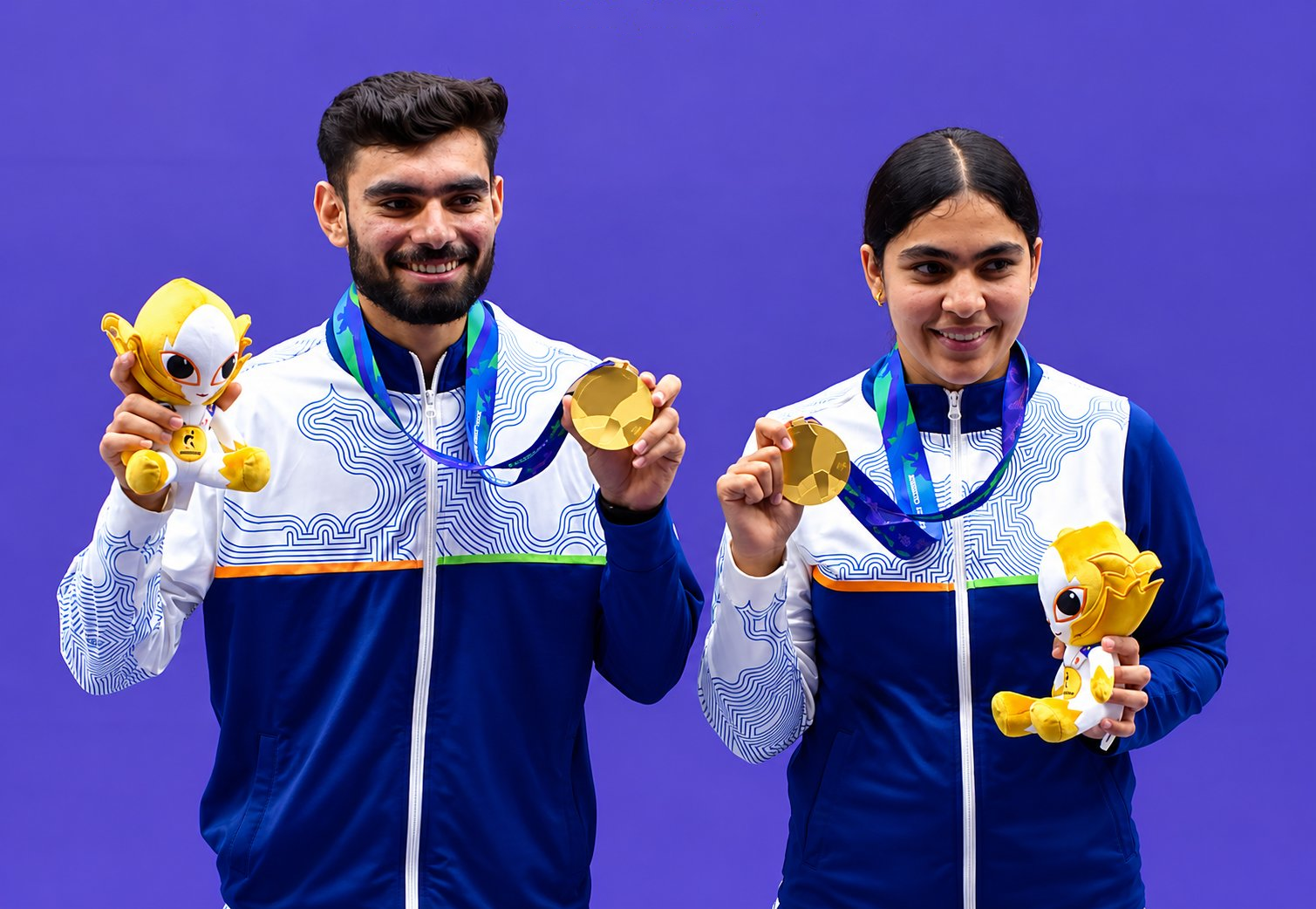
For India, shooting performance in 2026 was medal-rich, with the national team collecting 40 medals across the four ISSF World Cup stages, the ISSF World Championships in Doha and the Asian Games in Aichi-Nagoya. In fact, the haul of 11 gold, 18 silver and 11 bronze medals underlines the depth of the national programme. Yet a closer look at the numbers reveals a more complicated story: India won 23 medals in events on the Los Angeles 2028 Olympic programme, and its conversion rate dipped sharply at the World Championships, the first shooting quota event of the new Olympic cycle.
As of November 25, 2026, the shooting performance of India offers both reasons for optimism and clear areas that need attention. Meanwhile, pistol remained India’s biggest medal contributor, rifle repeatedly reached the podium without winning gold, and shotgun emerged as the discipline’s most striking success story. Three Olympic quota places secured in Doha have also given India’s LA28 campaign an early foundation.
India shooting performance 2026: the 40-medal tally
India built its 40-medal shooting performance in 2026 across three major competition blocks. First, the four ISSF World Cup stages produced 12 medals (six gold, three silver and three bronze). The World Championships in Doha added 13 (two gold, seven silver and four bronze), while the Asian Games delivered 15 (three gold, eight silver and four bronze).
| Competition | Gold | Silver | Bronze | Total |
|---|---|---|---|---|
| ISSF World Cup – four stages | 6 | 3 | 3 | 12 |
| ISSF World Championships, Doha | 2 | 7 | 4 | 13 |
| Asian Games, Aichi-Nagoya | 3 | 8 | 4 | 15 |
| Season total | 11 | 18 | 11 | 40 |
India finished second on the ISSF World Cup season medal table behind China and third at the Doha World Championships. Meanwhile, the Asian Games haul was marked by three historic gold medals. On paper, that makes the 2026 shooting performance of India impressive, but medal count alone does not tell the full story of Olympic readiness.
The Olympic-event measure: 23 of India’s 40 medals
Of India’s 40 medals, 23 came in individual or mixed-team events that feature on the LA28 shooting programme. In other words, that represents 57.5 per cent of the season’s total. The split varied considerably by competition: every one of India’s 12 World Cup medals came in Olympic events; eight of 15 Asian Games medals did; but only three of 13 medals at the World Championships were in Olympic events.
| Competition | All medals | Olympic-event medals | Olympic share |
|---|---|---|---|
| ISSF World Cup (four stages) | 12 | 12 | 100% |
| Asian Games | 15 | 8 | 53% |
| World Championships | 13 | 3 | 23% |
| Season | 40 | 23 | 57.5% |
In total, the 23 Olympic-event medals comprised nine gold, eight silver and six bronze. Specifically, sixteen were won in individual events and seven in mixed-team events. Mixed teams accounted for a third of India’s Olympic-event gold medals, demonstrating the importance of pairings and team preparation in the LA28 programme.
For India, the Doha figures are the biggest warning sign in the 2026 shooting performance. India’s two gold medals there came in team events outside the Olympic programme, while its three Olympic-event medals were Jaypal Malviya’s men’s 10m air pistol silver, Niraj Kumar’s men’s 50m rifle 3 positions bronze and Vivaan Kapoor’s men’s trap silver. All three podium finishes also secured LA28 quota places.
ISSF World Cup: India’s strongest and most consistent phase
In terms of shooting performance, the four World Cup stages were the most convincing stretch of 2026 for India. Moreover, the 12 medals – six gold, three silver and three bronze – all came in Olympic events. In particular, stages two and three, held across Munich/Almaty and Hangzhou/Lonato, were the most productive, with five medals apiece.
Women’s pistol was a major source of success. Esha Singh won the women’s 25m pistol at both Munich and Hangzhou, while Suruchi Singh claimed the women’s 10m air pistol title in Munich. Similarly, Udhayveer Sidhu won men’s 10m air pistol gold in Cairo. In addition, Neeru Dhanda added women’s trap gold at Lonato, and Palak Gulia and Mukesh Nelavalli opened India’s World Cup gold account with victory in the 10m air pistol mixed team event at Granada.
Other podium performances included Esha’s 10m air pistol silver at Munich, the mixed-team air pistol silver won by Manu Bhaker and Samrat Rana, Sainyam Vij’s 10m air pistol silver at Hangzhou, and bronze medals for Vivaan Kapoor and Neeru Dhanda in trap mixed team, Sonam Maskar and Himanshu Dhillon in 10m air rifle mixed team, and Manu Bhaker in women’s 25m pistol.
Doha 2026 shooting performance: India wins 13 medals and three LA28 quota places
India finished third in the medal standings at the ISSF World Championships in Doha with 13 medals: two gold, seven silver and four bronze. Specifically, the two gold medals came in the men’s 50m pistol team event, won by Ravinder Singh, Saurabh Chaudhary and Amanpreet Singh, and the women’s 25m pistol team event, won by Esha Singh, Manu Bhaker and Divya T.S.
The three Olympic-event podium finishes were especially important because Doha opened the LA28 quota qualification pathway for shooting. Jaypal Malviya won silver in men’s 10m air pistol, Niraj Kumar earned bronze in men’s 50m rifle 3 positions, and Vivaan Kapoor took silver in men’s trap after a 3–2 shoot-off. As a result, each result secured one quota place for India.
India’s other Doha medals reflected the breadth of its squad. Ravinder Singh won silver in men’s 50m pistol; Ankur Goel took silver in men’s 25m centre fire pistol; the women’s 10m air rifle team of Elavenil Valarivan, Shambhavi Kshirsagar and Sonam Maskar won silver; and the women’s 10m air pistol team of Manu Bhaker, Sainyam Vij and Suruchi Singh also finished second. Furthermore, India added further team and individual medals in 25m standard pistol, 50m rifle 3 positions and 25m centre fire pistol.
The contrast between the overall medal haul and the Olympic-event return was stark. India won 13 medals in Doha, but only three were in LA28 events. Therefore, the challenge now is to reproduce the podium form in the disciplines and formats that carry Olympic qualification value.
Asian Games: three historic gold medals in Aichi-Nagoya
Later in the season, India’s shooters collected 15 medals at the Aichi-Nagoya Asian Games: three gold, eight silver and four bronze. Notably, all three gold medals were historic achievements. Suruchi Singh and Kamaljeet won India’s first Asian Games gold in the 10m air pistol mixed team event, setting an Asian record. Neeru Dhanda won the women’s trap title, then teamed up with Kynan Chenai to claim India’s first Asian Games gold in trap mixed team, also with an Asian-record score of 34 out of 40.
Rifle contributed seven medals but no gold. Likewise, Elavenil Valarivan won silver in women’s 10m air rifle, Himanshu Dhillon took silver in men’s 10m air rifle, Esha Singh claimed silver in women’s 25m pistol, and Rudrankksh Patil won bronze in men’s 10m air rifle. Indian teams also collected silvers in men’s and women’s 10m air rifle and 50m rifle 3 positions. In addition, the skeet squads added bronze medals, including the mixed-team bronze won by Anantjeet Singh Naruka and Parinaaz Dhaliwal.
The Asian Games therefore highlighted both India’s growing strength in shotgun and the persistent gap between rifle consistency and gold-medal conversion.
India shooting performance in 2026 by discipline: pistol leads, rifle seeks the top step, shotgun breaks through
Pistol: the engine of India’s medal haul
Pistol accounted for 20 of India’s 40 medals and eight of the 11 gold medals. Moreover, it produced 12 Olympic-event medals, with most of that output coming in the World Cups. Above all, Esha Singh was among the season’s most successful shooters, winning five medals across competitions, including three gold and two silver. Manu Bhaker collected four medals, while Suruchi Singh won three.
However, the biggest events exposed a weakness in women’s 10m air pistol. India did not win a medal in the event at either the Asian Games or the World Championships. Manu finished fifth in both finals, while Suruchi missed the Asian Games final and placed sixth at the Worlds. Consequently, the World Cup success and strong world rankings did not translate into podium finishes when the major championships arrived.
Rifle: 11 medals, but no gold
By contrast, rifle shooters won 11 medals – seven silver and four bronze – without a single gold. Furthermore, six of the seven rifle medals at the Asian Games were silver. The results show a group capable of reaching finals and podium positions, but still looking for the decisive performance that converts a medal opportunity into gold.
There were encouraging signs. For example, Aishwary Pratap Singh Tomar set a 50m rifle 3 positions world record of 362.0 at the Asian Championship in New Delhi in February. Niraj Kumar’s Doha bronze secured India’s first rifle quota for LA28. Himanshu Dhillon, Elavenil Valarivan and Sonam Maskar also delivered important individual and team results through the season.
Shotgun: the breakout discipline
Shotgun produced nine medals, including three gold, two silver and four bronze. Neeru Dhanda led the charge with five medals: three gold, one silver and one bronze. In particular, her achievements included World Cup trap gold at Lonato, Asian Games women’s trap gold and Asian Games trap mixed team gold with Kynan Chenai. Vivaan Kapoor’s men’s trap silver at the World Championships also earned India an LA28 quota. Additionally, the skeet team’s Asian Games bronzes pointed to improving depth in an event where India has historically found podium finishes harder to secure.
The standout shooters behind the 2026 performance for India
| Shooter | Discipline | Medals | Gold–Silver–Bronze |
|---|---|---|---|
| Neeru Dhanda | Trap | 5 | 3–1–1 |
| Esha Singh | Pistol | 5 | 3–2–0 |
| Manu Bhaker | Pistol | 4 | 1–2–1 |
| Suruchi Singh | Pistol | 3 | 2–1–0 |
| Niraj Kumar | Rifle | 3 | 0–1–2 |
| Himanshu Dhillon | Rifle | 3 | 0–2–1 |
| Sonam Maskar | Rifle | 3 | 0–2–1 |
| Elavenil Valarivan | Rifle | 3 | 0–3–0 |
| Jaypal Malviya | Pistol | 1 | 0–1–0 |
| Vivaan Kapoor | Trap | 2 | 0–1–1 |
Above all, four of the most decorated shooters in the season review were women: Neeru Dhanda, Esha Singh, Manu Bhaker and Suruchi Singh. The men’s breakthroughs at Doha came from Jaypal Malviya, Niraj Kumar and Vivaan Kapoor, whose performances brought India its first three LA28 quota places.
The next generation is a major strength
India’s junior programme continued to provide reasons for confidence. The country topped the ISSF Junior World Championship in Suhl with 24 medals – seven gold, eight silver and nine bronze – for the second consecutive edition. India also topped the Junior World Cup in Cairo with 16 medals. For instance, Mukesh Nelavalli’s senior World Cup gold on debut offered an example of the pathway from junior success to senior international performance.
Equally, maintaining that pipeline will be important as India refreshes its senior combinations and builds depth across the Olympic events. The task is not simply to identify talented young shooters, but to help them handle the pressure and format of senior international finals.
Why did shooting performance for India dip at the 2026 World Championships?
The season review points to five factors. First, finals conversion remains a concern. For example, at Doha, 10 Indian finals appearances in individual events produced three medals, a 30 per cent conversion rate. Qualification rewards consistency over a long series, while finals demand repeated execution under elimination pressure. India’s training programme needs to give that final stage greater attention.
Second, the competition calendar was demanding. The Asian Games concluded on October 4 and the World Championships began on November 1, leaving a short turnaround after national trials and a busy World Cup circuit. Fatigue and the difficulty of peaking twice in a short period were identified as possible factors in the season review.
Third, frequent changes to team combinations may have affected continuity, particularly in mixed-team events where familiarity and coordination matter. Fourth, the comparison with 2025 needs context: India’s eight Olympic-event medals at the 2025 World Championships were exceptional. The three in 2026 were closer to the country’s 2022 and 2023 returns, rather than evidence of a collapse from an established standard.
Finally, women’s 10m air pistol needs a specific big-event reset. The discipline delivered strongly on the World Cup circuit but did not produce an individual medal at either the Asian Games or the Worlds. Preparation for major-event finals, mental performance under pressure and event-specific planning will be crucial.
LA28 outlook: three quotas secured, more work ahead
India left Doha with three of the 24 Olympic quota places on offer at the championship. Jaypal Malviya secured the men’s 10m air pistol quota, Niraj Kumar the men’s 50m rifle 3 positions quota, and Vivaan Kapoor the men’s trap quota. The season review notes that nine more ISSF quota competitions remain, including the 2027 World Rifle/Pistol and World Shotgun Championships and five Asian Championships.
The stated ambition is to secure more than 20 quotas, improving on the 21 India held for Paris 2024. With three in hand, the remaining qualification events will require consistent performances across pistol, rifle and shotgun. The early Doha return is a positive start, but it leaves little room for another low conversion rate at the next major quota event.
What India must prioritise in 2027
- Train for finals, not just qualification: build elimination-style finals, shoot-off simulations and pressure drills into national camps, and track finals conversion as a key performance indicator.
- Peak for quota events: organise the 2027 calendar around the World and Asian Championships, with World Cup participation planned to support those targets.
- Build stable mixed-team pairings: retain combinations where possible and give them enough competition time to develop rhythm and coordination.
- Give rifle a dedicated finals programme: the 11-medal, zero-gold return suggests a need to improve performance in the decisive final stages.
- Protect shotgun’s momentum: provide continued international exposure and support for trap and skeet athletes after the discipline’s breakthrough season.
- Promote junior talent: create clear pathways for the junior programme’s leading shooters to gain senior experience.
The final word on India shooting performance in 2026: a strong season, but not the finish line
Overall, the 2026 shooting performance from India was successful by volume and encouraging in its breadth. Forty medals, 11 golds, historic Asian Games titles and three opening LA28 quotas demonstrate that the country has talent across all three disciplines. The junior pipeline adds another layer of optimism.
But the Olympic-event split and Doha performance underline the difference between winning medals across a season and delivering when the biggest titles and quota places are at stake. Pistol must carry its World Cup form into major championships, rifle needs to turn repeated podiums into gold, and shotgun must sustain its breakthrough. The next step for India after this 2026 shooting performance is clear: convert depth into finals-day consistency and make the 2026 medal base count in the race to Los Angeles.
Data note: This review uses results compiled through November 25, 2026. The ISSF World Cup Final in Rome, scheduled for December 3–8, is not included. Olympic-event classification follows the season review’s definition of individual and mixed-team events on the LA28 programme; non-Olympic team formats and non-Olympic individual events are counted only in the overall medal tally.
Author: Ranjith | Voice of Indian Sport
Sources: ISSF World Championships Doha 2026 – official results and medal standings; ISSF Aichi-Nagoya 2026 results; ISSF – LA28 quota places awarded in Doha. Season-wide medal analysis and discipline breakdown: supplied India Shooting 2026 Season Review (data current to November 25, 2026).