

Bangkok 1966: When India’s Medal Count Fell, But History Was Made
From 33 medals in Jakarta to 21 in Bangkok.
On the surface, India’s campaign at the 1966 Asian Games looked like a step backwards.
Four years earlier, India had produced one of its greatest-ever Asian Games performances, winning 33 medals at Jakarta 1962 and finishing third in the medal table.
At Bangkok 1966, India’s overall haul fell to:
🥇 7 Gold
🥈 3 Silver
🥉 11 Bronze
🏅 21 Medals
India finished 5th in the overall medal table.
But the story of Bangkok 1966 was not simply about a decline in numbers.
It was about historic milestones, dominant athletics performances, the emergence of new champions and the beginning of another important chapter in Indian hockey’s Asian Games story.
And once again, athletics was at the heart of India’s campaign.
India’s Medal Tally at Bangkok 1966
| Medal | Number |
|---|---|
| 🥇 Gold | 7 |
| 🥈 Silver | 3 |
| 🥉 Bronze | 11 |
| 🏅 Total | 21 |
| Medal-table position | 5th |
India’s 21 medals came from five sports:
| Sport | 🥇 | 🥈 | 🥉 | Total |
|---|---|---|---|---|
| Athletics | 5 | 1 | 5 | 11 |
| Wrestling | 0 | 1 | 5 | 6 |
| Boxing | 1 | 1 | 0 | 2 |
| Hockey | 1 | 0 | 0 | 1 |
| Tennis | 0 | 0 | 1 | 1 |
| Total | 7 | 3 | 11 | 21 |
Athletics alone accounted for 11 of India’s 21 medals, while wrestling contributed another six.
Together, the two sports produced 17 of India’s 21 medals — more than 80% of the country’s total haul.
Athletics Once Again Carried India’s Campaign
If there was one constant in India’s early Asian Games history, it was the country’s strength in athletics.
Bangkok 1966 was no different.
Indian athletes won:
🥇 5 Gold
🥈 1 Silver
🥉 5 Bronze
for a total of 11 medals.
Five different Indian athletes stood on the top step of the podium.
🥇 Ajmer Singh — 400m Gold
Ajmer Singh became one of India’s standout performers in Bangkok.
He won the men’s 400m gold medal, while also taking silver in the 200m.
That made him India’s only double medallist in athletics at the Games.
🥇 Bhogeswar Baruah — 800m Gold
Another major performance came from Bhogeswar Baruah, who won gold in the men’s 800m.
His victory was particularly significant because his winning time of 1:49.4 set an Asian Games record.
Baruah became one of the defining middle-distance runners of his generation and an important figure in the history of Indian athletics.
🥇 Bhim Singh — High Jump Gold
Bhim Singh cleared the field in the men’s high jump to win another athletics gold for India.
Interestingly, Bhim Singh also won a bronze medal in wrestling, making him one of India’s rare multi-sport medallists at the Games.
🥇 Joginder Singh — Shot Put Gold
Joginder Singh added another field-event gold for India with victory in the men’s shot put.
His winning throw measured 16.22 metres.
🥇 Praveen Kumar Sobti — Discus Throw Gold
Praveen Kumar Sobti completed India’s athletics gold-medal sweep in the discus throw.
He threw 49.62 metres to win gold.
Sobti also won bronze in the hammer throw, giving him two medals in Bangkok.
The Athletics Medal Winners
India’s 11 athletics medals came from:
Gold
- Ajmer Singh — Men’s 400m
- Bhogeswar Baruah — Men’s 800m
- Bhim Singh — Men’s High Jump
- Joginder Singh — Men’s Shot Put
- Praveen Kumar Sobti — Men’s Discus Throw
Silver
- Ajmer Singh — Men’s 200m
Bronze
- Labh Singh — Men’s Triple Jump
- Balkar Singh — Men’s Discus Throw
- Praveen Kumar Sobti — Men’s Hammer Throw
- Manjit Walia — Women’s 80m Hurdles
- Christine Forage — Women’s Long Jump
The athletics medal list also shows that India’s success was not restricted to men’s events. Manjit Walia and Christine Forage contributed two bronze medals in women’s athletics.
Wrestling: Six Medals and Five Bronze
Wrestling remained another major pillar of India’s Asian Games campaign.
India won:
🥈 1 Silver
🥉 5 Bronze
for a total of 6 medals.
Silver
Bishwanath Singh — Men’s Light Heavyweight, 97kg
Bronze
- Shamrao Sable — Men’s Flyweight, 52kg
- Bishambar Singh — Men’s Bantamweight, 57kg
- Udey Chand — Men’s Lightweight, 70kg
- Sajjan Singh — Men’s Middleweight, 87kg
- Bhim Singh — Men’s Heavyweight, +97kg
The omission of Shamrao Sable from the supplied database is important. He won bronze in the 52kg freestyle event, bringing India’s wrestling tally to six medals and the overall Indian tally to 21.
This means the final verified medal distribution is 7 gold, 3 silver and 11 bronze.
Hawa Singh: India’s Boxing Champion
Indian boxing once again produced a gold medallist.
🥇 Hawa Singh — Heavyweight
Hawa Singh won the men’s heavyweight (+81kg) gold medal.
He became one of the most celebrated Indian boxers of his era and would go on to become one of the country’s most recognisable names in amateur boxing.
India also won a silver through:
🥈 Narayan More — Men’s Bantamweight, 54kg
That gave Indian boxing:
1 Gold + 1 Silver = 2 Medals
A Historic Moment in Indian Hockey
While athletics produced the most medals, hockey produced perhaps the most historically significant gold medal of the campaign.
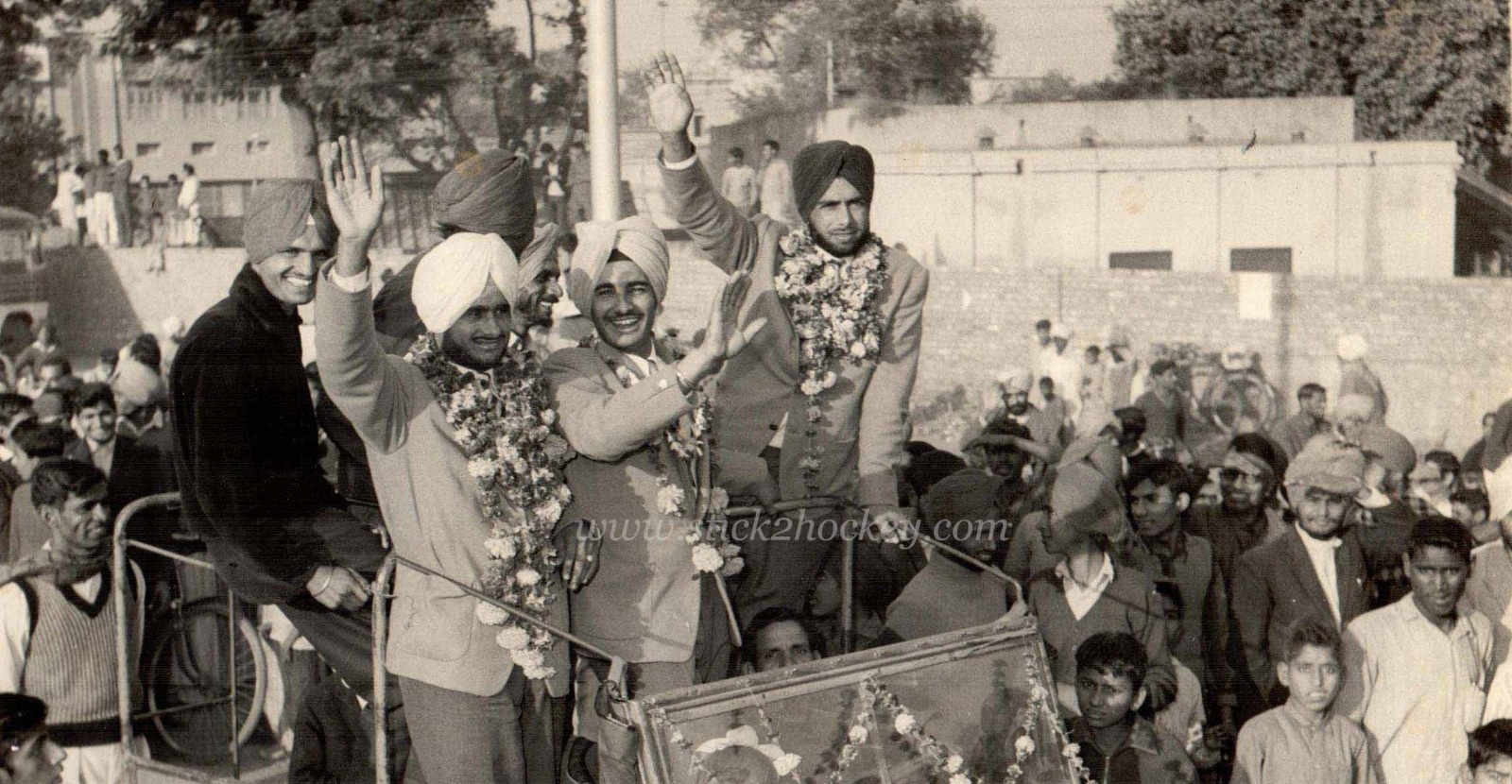
India won the men’s hockey gold medal in Bangkok.
The Indian team went through the tournament unbeaten and, remarkably, did not concede a goal across its five matches.
India defeated:
🇲🇾 Malaysia — 1–0
🇱🇰 Ceylon — 3–0
🇰🇷 South Korea — 1–0
🇯🇵 Japan — 3–0
before defeating Pakistan 1–0 in the final.
That victory gave India the gold medal in men’s hockey at the Asian Games.
The team included several important names from Indian hockey’s golden generation, including:
- Haripal Kaushik
- Balbir Singh Kular
- Mohinder Lal
- Shankar Lakshman
- Gurbux Singh
- Harbinder Singh
- Prithipal Singh
- Dharam Singh
The Bangkok triumph became another landmark in India’s long Asian Games hockey legacy.
India’s First Asian Games Tennis Medal
Bangkok 1966 also produced a milestone outside India’s traditional medal-winning sports.
Shiv Prakash Misra and Vinay Dhawan won bronze in men’s doubles tennis.
🎾 Men’s Doubles — Bronze
This was an important moment for Indian tennis at the Asian Games, marking India’s first tennis medal at the Games.
India’s 21 Medal Winners at the 1966 Asian Games
Here is the complete medal list, including the missing Shamrao Sable bronze:
🥇 Gold Medallists
- Ajmer Singh — Athletics — Men’s 400m
- Bhogeswar Baruah — Athletics — Men’s 800m
- Bhim Singh — Athletics — Men’s High Jump
- Joginder Singh — Athletics — Men’s Shot Put
- Praveen Kumar Sobti — Athletics — Men’s Discus Throw
- Hawa Singh — Boxing — Men’s Heavyweight (+81kg)
- Indian Men’s Hockey Team — Hockey — Men’s Team
🥈 Silver Medallists
- Ajmer Singh — Athletics — Men’s 200m
- Narayan More — Boxing — Men’s Bantamweight (54kg)
- Bishwanath Singh — Wrestling — Men’s Light Heavyweight (97kg)
🥉 Bronze Medallists
- Labh Singh — Athletics — Men’s Triple Jump
- Balkar Singh — Athletics — Men’s Discus Throw
- Praveen Kumar Sobti — Athletics — Men’s Hammer Throw
- Manjit Walia — Athletics — Women’s 80m Hurdles
- Christine Forage — Athletics — Women’s Long Jump
- Shiv Prakash Misra & Vinay Dhawan — Tennis — Men’s Doubles
- Shamrao Sable — Wrestling — Men’s Flyweight (52kg)
- Bishambar Singh — Wrestling — Men’s Bantamweight (57kg)
- Udey Chand — Wrestling — Men’s Lightweight (70kg)
- Sajjan Singh — Wrestling — Men’s Middleweight (87kg)
- Bhim Singh — Wrestling — Men’s Heavyweight (+97kg)
India’s Multiple Medallists
Several Indian athletes stood on the podium more than once in Bangkok.
Ajmer Singh — 2 Medals
🥇 400m
🥈 200m
Praveen Kumar Sobti — 2 Medals
🥇 Discus Throw
🥉 Hammer Throw
Bhim Singh — 2 Medals
🥇 High Jump — Athletics
🥉 Heavyweight — Wrestling
These performances demonstrate the versatility of India’s athletes during this era.
1962 vs 1966: A Significant Drop in Numbers
The contrast between Jakarta 1962 and Bangkok 1966 is striking.
| Edition | Gold | Silver | Bronze | Total | Rank |
|---|---|---|---|---|---|
| Jakarta 1962 | 10 | 13 | 10 | 33 | 3rd |
| Bangkok 1966 | 7 | 3 | 11 | 21 | 5th |
India’s total medal count fell by 12 medals.
Gold medals dropped from 10 to 7, while silver medals saw the biggest decline, falling from 13 to 3.
Interestingly, India’s bronze tally actually increased from 10 to 11.
So although the overall numbers declined, India continued to demonstrate depth across several sports.
What Made Bangkok 1966 Important?
It would be easy to look at the medal table and conclude that 1966 was simply a disappointing follow-up to the spectacular Jakarta Games.
That would miss the bigger picture.
Bangkok 1966 gave India:
🏃 11 athletics medals
🥊 Hawa Singh’s heavyweight boxing gold
🏑 A historic hockey gold
🎾 India’s first Asian Games tennis medal
🤼 Six wrestling medals
And it showcased a new generation of Indian athletes who would become important figures in the country’s sporting history.
The Games also demonstrated something that would become a recurring theme in India’s Asian Games journey:
India’s overall medal tally could fluctuate, but its traditional strengths in athletics, wrestling and hockey continued to provide a strong foundation.
From Jakarta’s High to Bangkok’s New Chapter
The story of India’s Asian Games journey between 1962 and 1966 is not simply one of 33 medals becoming 21.
It is the story of transition.
In Jakarta, India had produced a spectacular 33-medal breakthrough and finished third.
Four years later, the medal count declined and India slipped to fifth.
But Bangkok still produced champions.
Ajmer Singh. Bhogeswar Baruah. Bhim Singh. Joginder Singh. Praveen Kumar Sobti. Hawa Singh.
And it produced a hockey team that delivered another memorable gold medal.
The numbers may have been smaller than in 1962, but the foundations of Indian sport remained firmly in place.
As we look toward Aichi-Nagoya 2026, the journey from Bangkok 1966 offers an important reminder:
Asian Games success has never been a straight line.
There have been breakthroughs, setbacks, golden generations and rebuilding periods.
But through all of them, Indian athletes have continued to return to the continental stage — and create history.
Bangkok 1966 was another chapter in that story.
[…] spectacular 33-medal campaign at Jakarta 1962 and a relatively disappointing 21-medal haul at Bangkok 1966, the Indian contingent returned to Bangkok in 1970 with something to […]